Wednesday, April 6, 2011

Pop Culture References I Spotted/Imagined

...but it doesn't matter which, because, as they say, "All happenings are in the mind. Whatever happens in all minds, truly happens." - p. 352

"Most of the time they screamed abuse at him and threatened at every hesitation to deliver him over to the guards again; but sometimes they would suddenly change their tune, call him comrade, appeal to him in the name of Ingsoc and Big Brother, and ask him sorrowfully whether even now he had not enough loyalty to the Party left to make him wish to undo the evil he had done." - p. 318


This is the way my mind works, I'm afraid.

"Is there somewhere or other a place, a world of solid objects, where the past is still happening?" - p. 324


Not anymore-- all the Time Turners got smashed in the Ministry of Magic in 1995.

"How many fingers am I holding up, Winston?" -p. 325 (and approximately eighty-seven other times)


Apparently, that's a very deep question in literary circles.

"He knew in advance what O'Brien would say: ... That the Party was the eternal guardian of the weak, a dedicated sect doing evil that good might come, sacrificing its own happiness to that of others." - p. 337

I don't have a video clip for this yet because it'll be in Deathly Hallows: Part Two. *stifled excitement spasm* But Grindelwald, the dark wizard from the first Wizarding World War-- the one prior to Voldemort that coincided with World War II-- had a slogan, and it was "For the Greater Good." The point is that he was a very evil wizard, but he persuaded himself and those who loved him that what he was doing was morally acceptable. That's also the definition of the principle of double effect again.

"We are not interested in the good of others; we are interested solely in power. Not wealth or luxury or long life or happiness; only power, pure power." - p. 338

"There is no good and evil--only power and those too weak to seek it."

"We shall conquer [Eurasia and Eastasia] when it suits us. And if we did not, what difference would it make? We can shut them out of existence. Oceania is the world."

**Spoilers for The Hunger Games ahead**
The movie installment of The Hunger Games is still in the early stages, but in it, the world as we know it has essentially ended, and North America was divided into thirteen districts overseen but the infamous Capital. The thirteenth district was said to have rebelled and then promptly destroyed, and afterward, The Hunger Games were established as a punishment/entertainment for the remaining districts throughout the ages. However, somewhere down the line in the trilogy, Katniss realizes that District Thirteen does still sustain life, but it's being hushed up by the Capital because they don't want the other districts believing they can get away with rebellion.

"Do you understand that you are alone?" -p. 344

"Well if I were You-Know-Who, I'd want you to feel cut off from everyone else; because if it's just you alone, you're not as much of a threat." -Luna Lovegood, Harry Potter and the Order of the Phoenix
Voldemort's plan is the same as O'Brien's, I think. Winston wasn't really alone.

"He was not bored; he had no desire for conversation or distraction. Merely to be alone, not to be beaten or questioned, to have enough to eat, and to be clean all over, was completely satisfying." - p. 349/350

That reminded me of Siddhartha, in which Siddhartha embarks on a quest for nirvana, which is the absence of desire, if I'm not mistaken. Winston sounds eerily as though he found it in that cell, which brings up an old quandary of mine. Is nirvana really a desirable state? I'm not questioning it with skepticism as my overriding feeling. In the state of nirvana, I'm given to believe that there is no real suffering and no real joy--just pure contentment. The reason we can feel joy is because we know that it's the opposite of suffering and vice versa.
On a similar note, what exactly is the difference between joy and suffering? It's nothing tangible. I'm just curious. I mean I know, in the vague sense that everyone can feel it, but... it baffles me a little that they can coexist, and we recognize the difference. I guess it's just a human thing. I don't know. If someone has an insight here, please share.

"They dono 'ow to treat a lady, do they?" She paused, patted her breast, and belched. "Pardon," she said, "I ain't meself, quite." - p. 305

She reminds me of this lady:
...from Wallace and Gromit.

"Inconceivable, inconceivable that one blow could cause such pain!" - p. 316

Cliffhangers And Why They're Obnoxious

"He released Winston with a little push toward the guards. 'Room 101,' he said." -p. 356

That right there creates suspense. Earlier in the book, O'Brien's liiike, "You know what's in that room. Everyone does." That was a frustrating moment because I thought, "What about meeee, though? I don't know what's in there =|!" As it turns out, he tells us later, and then it's rats, which is dreadfully anticlimactic. (I know it's different for everybody, but still. Even the foreshadowing of that was weak.) Ah, but I digress. My point was that O'Brien finally said he was going to show us Room 101, and the reader's been wondering for a goodly many pages, now, what is in there, and then there's a section break, which is a structural technique of sorts. I don't know why authors do this. I suppose they intend for it to build suspense, but really.... We just have to turn the page. Actually, I just have to move my eyes approximately an inch-and-a-half further down the page. I did feel a little jolt of suspense, there, I guess, but I felt annoyed with myself about it afterward.


It's not like it's a new chapter of fanfiction, and you have to wait another who-knows-how-long to find out what happens next. That's called a cliffhanger, everyone, and I think they more or less died with Charles Dickens in terms of works of literary merit .

Monday, April 4, 2011

"How are you?" "Hi.... Oh, I'm sorry, did you say something that was not 'Hi'?"

My title is dedicated to Bryan Cary and also Tito's mom. Shhhh....
"O'Brien was looking down at him speculatively. More than ever he had the air of a teacher taking pains with a wayward but promising child." -p. 324 (in my bojankity version)

That's a Homeric epithet! That is, it's a "compound adjective" (wayward but promising) "used with a person or thing" (child/Winston). P.S. I keep forgetting Winston's name, which shouldn't happen after that many pages.

Homeric epithets are used for characterization purposes. Orwell may use lots of physical descriptions in his work, but he also likes to give his audience a sense of the demeanor of various characters.


Thinking about Homeric epithets makes me think about The Iliad, which makes me think about Achilles, which makes me think about hurty tendons. Ergo, Homeric epithets hurt in an entirely imaginary but nonetheless uncomfortable way.


Tuesday, March 22, 2011

Your mom goes to college.

Wait-- there's more!

1. "Why should one feel it to be intolerable unless one had some kind of ancestral memory that things had once been different?" This reminded me a lot of Siddhartha because the premise of that novel was sort of that Siddhartha was, at least for a time, trying to rid himself of desire, as is the Buddhist idea of enlightenment or nirvana.


2. "Ear trumpets for listening through keyholes! My little girl brought one home the other night--tried it out on our sitting room door, and reckoned she could hear twice as much as with her hear to the hole." I do not know what precisely an "ear trumpet" is, so my mind wandered to this:

0:40 Do it. Do it do it do it. Or don't. Your call.

3. "February your grandmother!" And here I thought Napoleon Dynamite was the source of all "your mom" jokes.


4. Also, I don't feel like citing every single time this happens, but I suppose I should use one. "The old man whom he had followed was standing at the bar, having some kind of altercation with the barman, a large, stout, hook-nosed young man with enormous forearms." Orwell gives a physical description of everybody. He usually comments on their hair color and physique, but this example is sort of an exception.

Pooms, chicky.

I feel like I've made some interesting observations, but they're not so connected to each other, and I'm just going to shove them out there.

1. "It was a lean Jewish face, with a great fuzzy aureole of white hair and a small goatee beard--a clever face, and yet somehow inherently despicable, with a kind of senile silliness in the long thin nose near the end of which a pair of spectacles was perched. It resembled the face of a sheep, and the voice, too, had a sheeplike quality." If there were a third Dumbledore brother, that would be this Goldstein character, I think. He's got Albus' spectacles and silliness and nose and Aberforth's goatee and... livestockishness. Observe:

Photo size symmetry fail, but you get the picture.

2. "There was no reproach either in their faces or in their hearts, only the knowledge that they must die in order that he might remain alive, and that was part of the unavoidable order of things." That right there sounds a lot like the principle of double effect, about which we're learning in Morality this very week. To fit those requirements, a situation has to meet these criteria:
  1. the nature of the act is itself good, or at least morally neutral;
  2. the agent intends the good effect and not the bad either as a means to the good or as an end itself;
  3. the good effect outweighs the bad effect in circumstances sufficiently grave to justify causing the bad effect and the agent exercises due diligence to minimize the harm.
3. "'Except--' began Winston doubtfully, and then stopped." "'The proles are not human beings,' he said carelessly." I like George Orwell's style. I really do. But Stephen King would tear it to shreds. “I believe the road to hell is paved with adverbs, and I will shout it from the rooftops.” -- Stephen King, On Writing

[_____________]

I would like to take this opportunity to rail against this Syme fellow. "In your heart you'd prefer to stick to Oldspeak, with all its vagueness and its useless shades of meaning. You don't grasp the beauty of the destruction of words."

He's killing me, Smalls.


But seriously, I thought this Newspeak business was going to be a trippy little vernacular that I would bring into my own everyday language. I was going to start saying stuff was doubleplusungood, right and left. Now, I'm engaging in a senseless boycott of all such phrases, just because I don't like this fictional character and what he's doing to the English language. I bet you think I'm being dramatic for entertainment purposes.

Maybe a little.

In all seriousness, though, I can't see what the point of this Newspeak--

Wait. I remembered what the point is. They're making it impossible to commit "thoughtcrime" by erasing words conducive to discontent. Yeah. "In the end we shall make thoughtcrime literally impossible, because there will be no words in which to express it." That sounds like my worst nightmare. To feel that things are not quite right but never be able to understand why because of a simple... dialect insufficiency... would drive me insane.

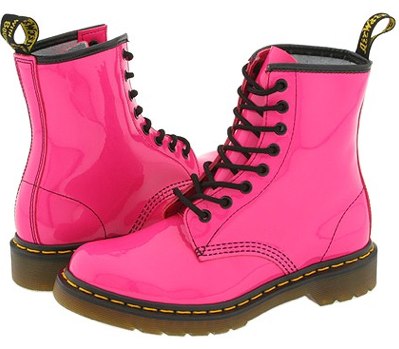
Paradox. (Geddit? ... Pair o' Docs? ...I'm really trying.)

"WAR IS PEACE
FREEDOM IS SLAVERY
IGNORANCE IS STRENGTH."

Leaving aside for the moment the frustrating lack of punctuation in that thought, and also pleading forgiveness for the obnoxious and apparently irrevocable underline effect, I will now point out the paradoxical nature of Big Brother's three favorite slogans. It's pretty obvious.

War is the opposite of peace. They are antonymns. However, the Party would like everyone to believe that they live in a peaceful society, even though they don't, so they brainwash everyone to believe this stuff.

Likewise, freedom is the opposite of slavery. That sentence (fragment? run-on?) makes no sense, but people believe it because they no longer have evidence to the contrary.

The final "Ignorance is strength" idea is slightly less ridiculous, but only because ignorance is not the opposite of strength. Ignorance is a subset of weakness, though, and weakness is the opposite of strength. Everybody's drinking gin and beer all the time instead of water, though, and they're all (except Winston and a few others maaaybe) too gullible to understand that of course war isn't peace, and freedom isn't slavery, and ignorance isn't strength.